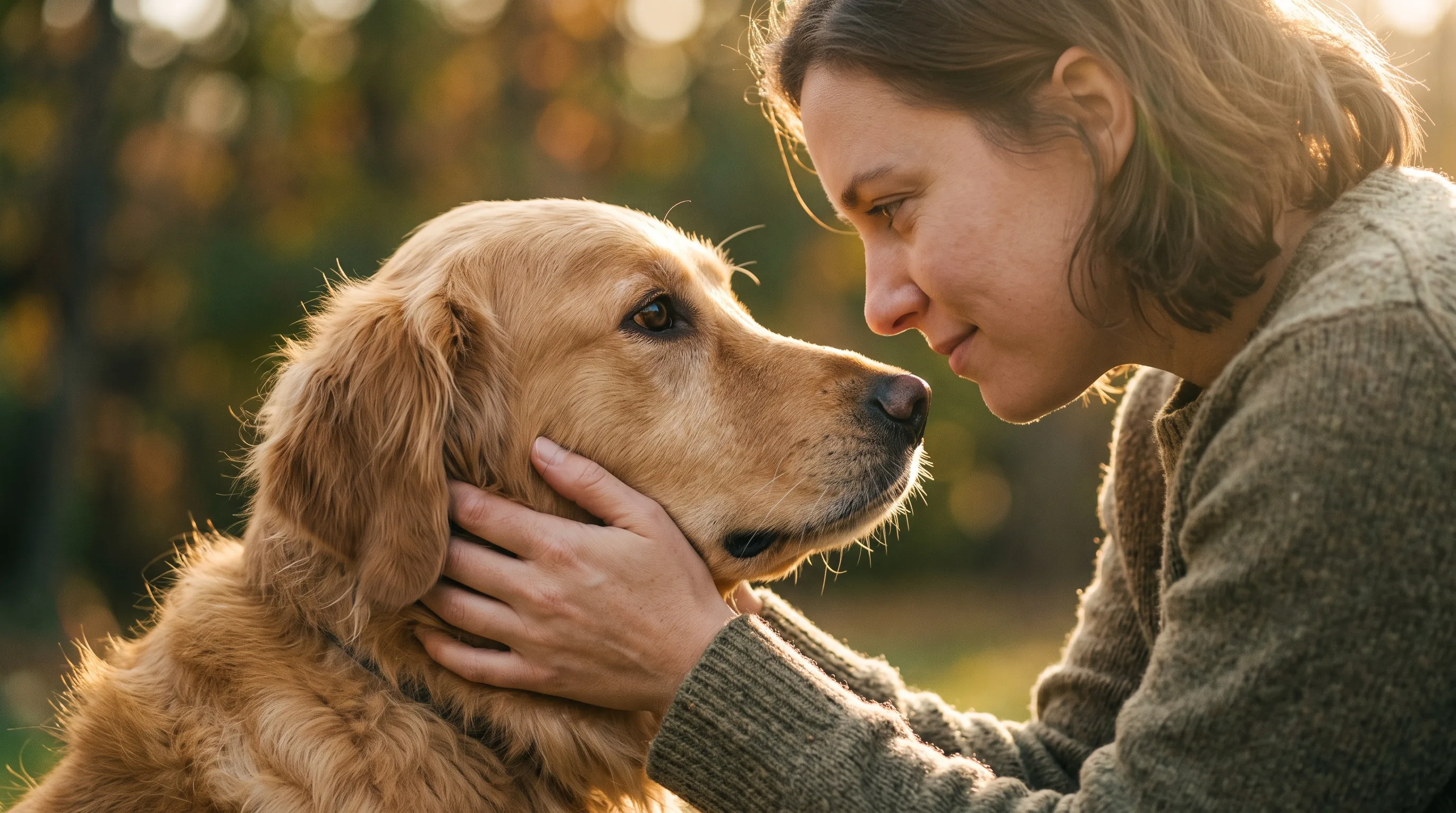
Introduction: The Unique Place Dogs Hold in the Human Heart
Ask anyone who has ever shared a home with a canine companion why they love dogs, and the answers often sound almost poetic: loyalty without condition, joy that feels contagious, a silent understanding that transcends words. Yet beneath the affectionate anecdotes lies a robust body of scientific research that explains why the human‑dog relationship feels qualitatively different from our bonds with cats, horses, or even other people. This article explores the multilayered reasons behind our profound affection for dogs—examining the neurobiology of oxytocin, the evolutionary history of domestication, the behavioral mechanisms of gaze and attachment, and the cultural and psychological dimensions that reinforce this interspecies love.
By tracing the pathway from ancient wolves curled beside campfires to modern service dogs navigating crowded airports, we uncover how a combination of biological reciprocity and mutual shaping has created a bond that is not merely sentimental but fundamentally adaptive for both species.
1. The Oxytocin‑Gaze Positive Loop: A Neurobiological Foundation
One of the most compelling explanations for the intensity of the human‑dog bond comes from a hormone best known for its role in maternal attachment: oxytocin. In a landmark 2015 study, Nagasawa and colleagues demonstrated that when dogs and their owners engage in mutual gazing, both parties experience a surge in oxytocin levels—a feedback loop that mirrors the parent‑infant bonding mechanism.
“Mutual gaze between humans and dogs increases oxytocin concentrations in both species, and this increase is associated with higher rates of affiliative behavior.”
Nagasawa et al., Science, 2015
This oxytocin‑gaze positive loop operates as follows:
- Eye contact initiates the cascade: When a dog looks into its owner’s eyes (and vice versa), the brain’s hypothalamus releases oxytocin into the bloodstream.
- Oxytocin enhances social salience: The hormone makes social stimuli more rewarding, increasing the motivation to maintain proximity and engage in affiliative behaviors such as touching, vocalizing, or playing.
- Behavioral feedback amplifies the loop: Increased affiliative behavior leads to more eye contact, which triggers further oxytocin release, creating a self‑reinforcing cycle.
Crucially, this loop is species‑specific. While humans experience oxytocin release during mutual gaze with other humans and even with cats, the magnitude and consistency of the effect are markedly stronger with dogs. Comparative studies show that dog‑owner pairs exhibit oxytocin increases of up to 300% after a brief interaction, whereas cat‑owner pairs show comparatively modest changes.
The evolutionary implication is clear: dogs that were better at eliciting human oxytocin release—through gaze, facial expressions, and temperament—were more likely to receive care, food, and protection, thereby increasing their reproductive success. Over generations, this selective pressure sculpted both canine behavior and human responsiveness, forging a biochemical partnership that underlies our deep affection.
2. From Wolves to Companions: The Evolutionary Path of Domestication
The story of why we love dogs begins tens of thousands of years ago, when wolves first began to linger near human settlements. Unlike other domesticated animals that were primarily selected for traits such as size, milk production, or strength, dogs were shaped chiefly for social compatibility.
2.1. The Self‑Domestication Hypothesis
One influential theory posits that wolves initiated domestication themselves by selecting for individuals with lower fear and aggression toward humans. These “friendlier” wolves gained access to human food waste, enjoyed greater survival rates, and eventually diverged genetically from their wild counterparts. Over time, traits such as floppy ears, curled tails, and varied coat colors—hallmarks of the domestication syndrome—appeared as by‑products of selection for tameness.
2.2. Co‑evolution of Social Cognition
As dogs became attuned to human gestures, humans, in turn, became more adept at reading canine signals. This reciprocal shaping enhanced cooperative behaviors such as hunting together, guarding settlements, and later, herding livestock. Notably, dogs excel at interpreting human pointing gestures—a skill rare even among our closest primate relatives. In experimental settings, dogs outperform chimpanzees in following a human’s point to locate hidden food, suggesting that domestication refined a specialized form of social cognition.
Genetic studies have identified regions of the dog genome associated with social behavior, including the WBSCR17 region (linked to Williams‑Beuren syndrome in humans, which manifests as hypersociability) and OXTR (the oxytocin receptor gene). Variants in these genes correlate with increased gaze duration and owner‑directed affection, providing a molecular signature of the bond.
2.3. The Timeline of Partnership
- ~40,000–30,000 years ago: Initial wolf‑human interactions; early protodogs begin to show reduced flight distance.
- ~20,000–15,000 years ago: Clear morphological divergence; dogs appear in archaeological sites across Europe and Asia.
- ~12,000 years ago: Dogs spread with migrating human populations, adapting to diverse ecologies—from Arctic sled companions to African village guardians.
- Industrial era: Breed specialization accelerates, producing the vast phenotypic diversity we see today, yet the core social competencies remain remarkably consistent across breeds.
This long shared history has allowed natural and artificial selection to fine‑tune a mutualistic relationship where both species derive fitness benefits: humans gain hunting assistance, protection, and later, emotional support; dogs receive food, shelter, and reproductive opportunities.
3. Behavioral Mechanisms That Strengthen the Bond
Beyond hormones and genetics, specific behavioral patterns make dogs uniquely suited to become humanity’s favorite animal companion.
3.1. The Power of the Gaze
As discussed, mutual gaze triggers oxytocin release, but dogs also use gaze strategically to communicate needs and intentions. A dog’s “puppy‑eyes” expression—characterized by raised inner eyebrows—mimics a human infant’s sad face, eliciting nurturing responses. Experiments show that shelter dogs that produce this expression more frequently are adopted faster, indicating that the trait has been favored through human selection.
3.2. Vocal Communication and Empathic Responsiveness
Dogs possess a rich vocal repertoire—barks, whines, growls, and howls—that varies in pitch, duration, and context. Humans are remarkably adept at discerning the emotional valence of these sounds; a high‑pitched whine is interpreted as distress, while a low‑frequency bark may signal alarm. This acoustic sensitivity fosters empathic responsiveness, prompting owners to attend to their dog’s perceived needs.
Moreover, dogs exhibit contagious yawning—a rudimentary form of empathy—more frequently in response to their owner’s yawns than to strangers’, suggesting that they are attuned to human emotional states.
3.3. Physical Touch and Synchrony
Physical contact, such as petting, stroking, or simply lying close together, lowers cortisol (the stress hormone) in both species and elevates oxytocin. Studies measuring heart‑rate variability have found that dog‑owner pairs often exhibit synchronized rhythms during relaxed interactions, a phenomenon known as physiological synchrony. This synchrony is a hallmark of strong social bonds and is observed less consistently in interactions with other pets.
3.4. Training Cooperativeness and Shared Goals
The ability to learn from humans through operant conditioning and observational learning enables dogs to participate in complex cooperative tasks—from agility courses to search‑and‑rescue missions. When humans and dogs work toward a shared objective, the sense of achievement and mutual reliance deepens the affective bond. Training sessions also provide regular, structured opportunities for positive interaction, reinforcing attachment over time.
4. Psychological and Cultural Dimensions of Our Love for Dogs
While biology lays the groundwork, psychological needs and cultural narratives amplify and sustain our affection for dogs.
4.1. Attachment Theory Applied to Human‑Dog Relationships
John Bowlby’s attachment theory, originally formulated to describe infant‑caregiver bonds, has been successfully extended to human‑pet relationships. Dogs often fulfill the role of a “secure base”: their presence provides a sense of safety that enables owners to explore the environment with greater confidence. In stressful situations, owners report turning to their dogs for comfort much as they would to a human attachment figure.
Research using the Adult Attachment Interview adapted for pet owners shows that individuals with secure attachment styles tend to report higher levels of satisfaction and lower levels of anxiety in their relationships with dogs. Conversely, those with anxious or avoidant attachment may exhibit clingy or distant behaviors toward their pets, mirroring patterns seen in human relationships.
4.2. Dogs as Social Catalysts
Beyond the dyadic bond, dogs act as social lubricants that facilitate human‑to‑human interactions. Walking a dog increases the likelihood of spontaneous conversations with strangers, and dog owners are perceived as more approachable and trustworthy. This “social catalyst” effect enhances owners’ sense of belonging and community integration, which in turn reinforces the positive feelings they associate with their canine companions.
4.3. Cultural Representations and Mythology
Throughout history, dogs have occupied privileged positions in myth, religion, and art. In ancient Egypt, the god Anubis—depicted as a jackal‑headed figure—guided souls to the afterlife, underscoring the dog’s role as a protector. Greek mythology features Cerberus, the three‑headed hound guarding the underworld, while Norse tales tell of Garmr, the watchdog of Hel. These narratives cast dogs as loyal guardians and companions, virtues that have been celebrated in literature from Homer’s Odyssey (Argus, Odysseus’ faithful dog) to modern classics like Old Yeller and Marley & Me.
Contemporary media continues to amplify this affection: viral videos of dogs performing heroic acts, therapy dogs visiting hospitals, and Instagram accounts dedicated to canine cuteness shape a cultural zeitgeist that prizes the dog‑human bond.
4.4. Therapeutic and Functional Roles
The practical contributions of dogs further cement their status in human society. Service dogs assist individuals with physical disabilities, guide the visually impaired, and alert to medical events such as seizures or hypoglycemia. Therapy dogs reduce anxiety in clinical settings, improve mood in elderly care facilities, and support children with autism spectrum disorder. These utilitarian benefits create a feedback loop: the more we rely on dogs for concrete assistance, the more we value and love them.
5. Comparative Perspective: Why Not Cats, Horses, or Other Animals?
To understand the exceptional nature of the human‑dog bond, it is useful to contrast it with relationships we form with other domesticated species.
5.1. Cats: Independence Versus Dependence
Cats, though beloved by many, display a different socioecological strategy. Their solitary hunting ancestry results in less reliance on human cues; they are less prone to sustained eye contact, and their oxytocin response to human interaction is generally weaker. While cats can form strong attachments, their behavioral repertoire offers fewer opportunities for the reciprocal gaze‑oxytocin loop that drives intense bonding in dogs.
5.2. Horses: Size, Utility, and Limited Mimicry
Horses have been essential partners in agriculture, transportation, and warfare, yet the bond tends to be more utilitarian than affective. Horses excel at reading human body language but rarely engage in mutual gaze; their large size and flight‑oriented temperament make close, prolonged physical intimacy less common. Consequently, while equestrian relationships can be deep, they often lack the neurobiological feedback mechanisms seen with dogs.
5.3. Livestock and Exotic Pets: Functional Focus
Animals such as cows, goats, or reptiles are primarily valued for production (meat, milk, fiber) or novelty. Their social cognition toward humans is limited, and they rarely exhibit the expressive facial morphology (e.g., eyebrow movement) that triggers human caregiving responses. Hence, affection toward these species tends to be more instrumental or aesthetic rather than the deep, mutually reinforcing bond observed with dogs.
5.4. Primates: Cognitive Similarity but Lack of Domestication Syndrome
Although non‑human primates share sophisticated social skills with humans, they have not undergone the domestication process that selected for reduced fear and increased sociability toward humans. Consequently, interactions with primates can be rewarding but are often mediated by caution, risk, and complex social hierarchies that inhibit the simple, affectionate dynamic we experience with dogs.
6. The Dark Side of the Bond: When Love Becomes Problematic
Our intense affection for dogs is not without pitfalls. Recognizing potential downsides helps foster healthier, more sustainable relationships.
6.1. Over‑Attachment and Separation Anxiety
Some owners develop an overreliance on their dogs for emotional regulation, which can lead to distress when separated. Dogs, in turn, may develop separation‑anxiety disorders characterized by vocalization, destructive behavior, or house soiling when left alone. Proper training, gradual desensitization, and ensuring the dog’s own needs for independence are met can mitigate these issues.
6.2. Anthropomorphism and Misreading Canine Signals
The tendency to attribute human thoughts and emotions to dogs can cause owners to misinterpret signals—for example, labeling a dog’s appeasement lip‑lick as “guilt.” While anthropomorphism enhances empathy, it can also lead to inappropriate expectations or training methods. Educating owners about canine body language promotes more accurate communication.
6.3. Welfare Concerns in Breeding Practices
The human desire for specific aesthetic traits has, in some cases, compromised canine health. Brachycephalic breeds (e.g., Bulldogs, Pugs) suffer from respiratory difficulties, while extreme size selection leads to orthopedic problems. Responsible breeding that prioritizes health, temperament, and genetic diversity is essential to preserve the well‑being of the species we love.
6.4. Societal Inequities in Access to Dog Companionship
Not everyone enjoys equal access to the benefits of dog ownership. Housing restrictions, financial constraints, and cultural stigmas can limit who can keep a dog. Recognizing these disparities encourages community initiatives such as pet‑friendly housing policies, subsidized veterinary care, and programs that match shelter dogs with individuals in need of companionship.
7. Practical Steps to Nurture and Deepen Your Bond with a Dog
Understanding the science behind the bond equips us to cultivate it intentionally. Below are evidence‑based practices to strengthen the relationship with your canine companion.
7.1. Prioritize Mutual Gaze (Without Staring)
Engage in soft, relaxed eye contact during calm moments—while petting, during quiet play, or simply sitting together. Avoid prolonged, hard staring, which can be perceived as threatening. Aim for brief, frequent exchanges that feel natural.
7.2. Use Positive‑Touch Routines
Daily grooming, massage, or simply petting releases oxytocin in both parties. Focus on areas dogs typically enjoy (chin, chest, base of the tail) and observe their body language for signs of pleasure (loose posture, soft eyes, wagging tail).
7.3. Engage in Joint Activities
Participate in activities that require cooperation: obedience training, agility courses, scent work, or even simple games like fetch. Shared goals foster a sense of teamwork and increase opportunities for positive reinforcement.
7.4. Maintain Predictable Routines
Dogs thrive on predictability. Regular feeding times, walks, and bedtime rituals create a sense of security that enhances attachment. Consistency also reduces anxiety, making the dog more receptive to affectionate interactions.
7.5. Respect the Dog’s Individuality
Every dog has a unique personality—some are exuberant and outgoing, others are reserved and observant. Tailor your interaction style to match your dog’s temperament; forcing an introverted dog into high‑energy play may cause stress, while neglecting a sociable dog’s need for interaction can lead to boredom.
7.6. Invest in Training That Builds Trust
Choose methods based on positive reinforcement (treats, praise, play) rather than punishment. Trust‑building exercises such as “look at me” cues, impulse‑control games, and cooperative problem‑solving strengthen the dog’s confidence in you as a guide.
7.7. Monitor Health and Well‑Being
A healthy dog is more capable of engaging in affectionate behavior. Regular veterinary check‑ups, balanced nutrition, adequate exercise, and mental stimulation (puzzle toys, nose work) are foundational to a thriving bond.
7.8. Share the Love Socially
Take your dog to pet‑friendly cafés, parks, or events. Positive social experiences reinforce the dog’s confidence and provide you with opportunities to witness your dog’s joy, further deepening your emotional connection.
8. Looking Forward: The Future of Human‑Dog Relations
As science and technology advance, new dimensions of the human‑dog bond are emerging.
8.1. Wearable Tech and Real‑Time Monitoring
Devices that track a dog’s heart rate, activity, and even facial expressions allow owners to gain insights into their pet’s emotional state. Some wearables provide haptic feedback to the owner when the dog’s stress levels rise, facilitating timely intervention.
8.2. AI‑Enhanced Communication
Researchers are experimenting with machine‑learning models that interpret canine vocalizations and body language to translate intent into human‑understandable signals (e.g., “I’m hungry,” “I need to go outside”). Such tools could enhance mutual understanding, especially for individuals with communication challenges.
8.3. Genomic Selection for Sociability
Breeders are beginning to incorporate genetic markers associated with oxytocin responsiveness and gaze behavior into selection programs. The goal is to amplify the natural propensity for bonding while maintaining health and diversity.
8.4. Expanding Roles in Mental Health
Beyond traditional therapy dogs, programs are exploring dogs as adjuncts in treating conditions such as PTSD, depression, and autism. Preliminary results indicate that canine companionship can reduce symptoms, improve social functioning, and increase treatment adherence.
8.5. Ethical Frameworks for Coexistence
As we deepen our integration of dogs into domains like workplaces, schools, and public transit, establishing clear welfare standards becomes crucial. Ongoing dialogue among scientists, ethicists, policymakers, and dog‑lover communities will shape guidelines that honor both human needs and canine well‑being.
Conclusion: A Bond Forged by Biology, History, and Heart
The reason we love dogs more than many other animals is not a mystery to be solved by a single factor, but a tapestry woven from evolutionary history, neurobiology, behavior, psychology, and culture. The oxytocin‑gaze positive loop offers a biochemical explanation for the immediacy of our affection, while thousands of years of coevolution have shaped dogs into expert partners in human life. Behavioral mechanisms—gaze, vocalization, touch, and cooperative learning—provide the everyday language through which this bond is expressed and reinforced. Psychological needs for attachment, social connection, and meaning find ready fulfillment in the presence of a canine companion, and cultural narratives continually celebrate and renew our admiration.
Recognizing the multifaceted nature of this relationship invites us to nurture it responsibly: to respect the dog’s species‑specific needs, to avoid excess anthropomorphism, and to promote breeding and ownership practices that prioritize health and welfare. In doing so, we preserve not only the joy and comfort that dogs bring into our lives but also the remarkable evolutionary partnership that has endured since the first wolves dared to approach a human fire.
In the end, the love we feel for dogs is a testament to life’s capacity for mutual transformation—how two species, through shared gaze, touch, and trust, can remake each other’s worlds, creating a bond that is as ancient as it is ever‑new.
Comments (0)