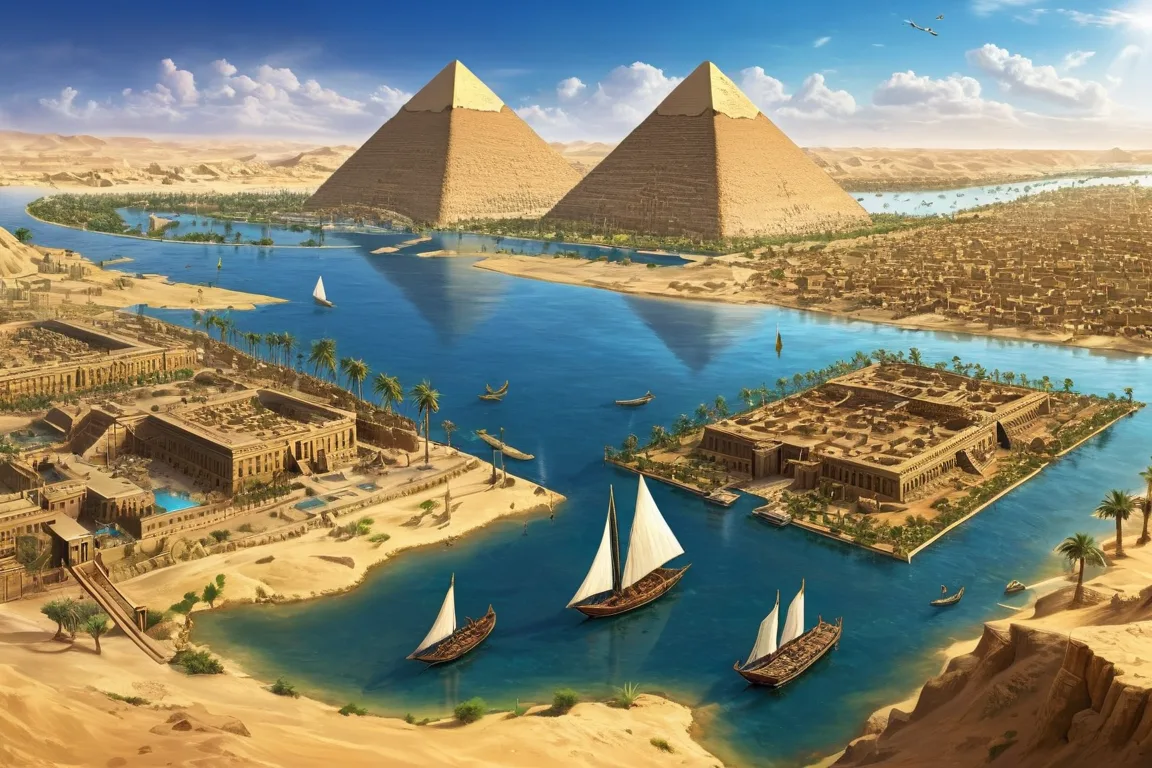
The Nile's Gift: Egypt at the Dawn of Civilization (Circa 4000 BCE)
A deep dive into the origins of the world's first great empire.
🌊 I. The Geography of Destiny: Life on the Nile
The Nile River was more than just a water source; it was the central organizing principle of life. Its predictable annual flooding deposited rich, black silt, creating the incredibly fertile 'Black Land' (Kemet). This unique geography allowed for intensive agriculture, supporting a dense population that could sustain complex social structures.
🌍 The Environment's Impact: The reliance on the Nile fostered sophisticated hydraulic engineering. Early communities developed complex irrigation systems, turning a seasonal gift into a reliable, managed resource.
*Visualizing the life-giving power of the Nile.*
🏛️ II. The Birth of Statehood: Governance and Society
The transition from small villages to a unified state was gradual but revolutionary. The need to coordinate labor for massive projects (like granaries and irrigation canals) necessitated a powerful, central authority. This led to the emergence of the divine king, the Pharaoh.
Social Structure:
- The Elite: Priests, viziers, and scribes formed the ruling class, managing religious doctrine and state administration.
- Artisans & Merchants: Specialized craftsmen (potters, metalworkers, weavers) and early traders were vital, forming the growing middle class.
- Farmers: The backbone of society, their labor fueled the entire economy.
✨ III. Cultural Revolutions: Beliefs and Innovation
The early period saw the flourishing of unique intellectual and artistic achievements. The concept of the afterlife was not just a belief; it was a powerful motivator that drove monumental art and engineering.
Writing and Record Keeping:
The development of early hieroglyphic writing systems allowed for the systematic recording of history, religious rituals, and economic transactions—a monumental leap in human history.
Art and Symbolism:
Art was deeply symbolic. Figures were depicted using a composite view (head in profile, body frontal) to ensure all aspects of the being were represented, reflecting a deep understanding of anatomy and spirituality.
*Artifacts from the Naqada culture demonstrate early artistic mastery.*
Comments (0)