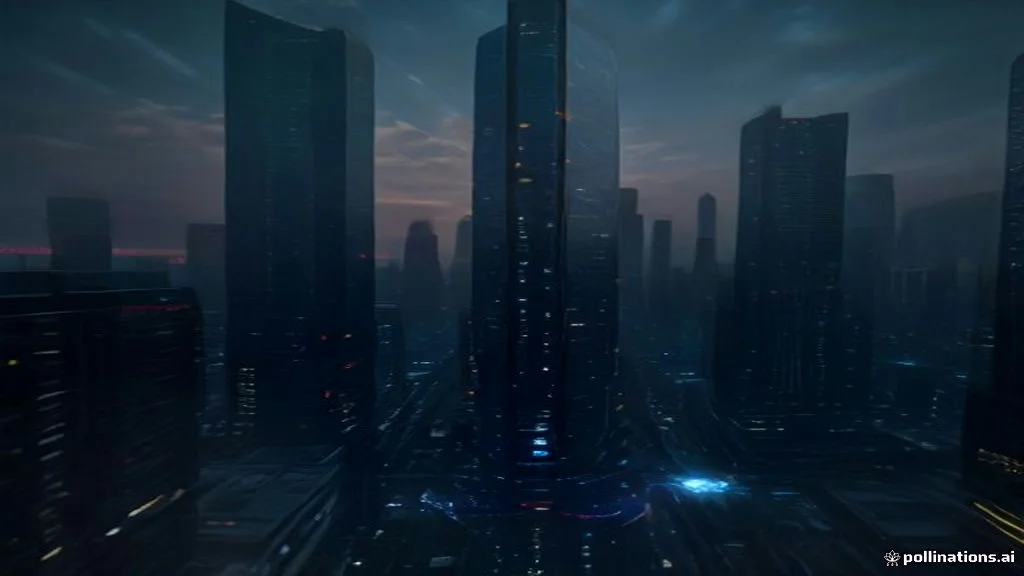
Introduction: The Dawn of a New Era
As we stand on the cusp of the third decade of the 21st century, the pace of change feels relentless. Yet, the transformations we witness today are merely the prelude to a far more profound metamorphosis that will unfold by 2050. This article embarks on a visionary journey to imagine what life might look like three decades from now, weaving together trends in artificial intelligence, biotechnology, renewable energy, urban design, and social evolution. The goal is not to predict with certainty, but to explore plausible futures that inspire thoughtful preparation and adaptive resilience.
"The future is not something we enter. The future is something we create." – Leonard I. Sweet
Technological Transformations: The Invisible Fabric of Life
Artificial Intelligence: From Tools to Partners
By 2050, artificial intelligence will have evolved beyond narrow applications into pervasive, context-aware companions that augment every facet of human cognition. AI systems will be deeply embedded in personal devices, home environments, workplaces, and public infrastructure, operating with a level of contextual understanding that feels almost intuitive. Rather than replacing humans, these intelligences will serve as collaborative partners, handling routine data processing, offering real-time insights, and even engaging in creative brainstorming.
Personal AI assistants will anticipate needs before they arise—suggesting optimal travel routes based on real-time traffic, weather, and personal schedule; curating news and entertainment tailored to evolving interests; and managing household resources like energy and water with maximal efficiency. In professional settings, AI will co-pilot complex projects, simulate outcomes, and facilitate cross-disciplinary collaboration by translating jargon and identifying hidden connections between fields.
Biotechnology and Human Enhancement
The convergence of genomics, synthetic biology, and neurotechnology will usher in an era where health is proactive, personalized, and increasingly preventable. Newborns will undergo comprehensive genomic screening, enabling early interventions for potential hereditary conditions. Gene-editing therapies, refined to unprecedented precision and safety, will cure genetic disorders that were once considered life sentences.
Beyond treatment, elective enhancements will become a subject of societal debate. Cognitive boosters—safe nootropics that enhance memory, focus, and learning speed—may be widely adopted by students and professionals alike. Sensory augmentation, such as implants that extend vision into infrared or ultraviolet spectra, or enable direct neural interface with digital information, will blur the line between biological and artificial perception. These technologies will raise profound questions about equity, identity, and the very definition of what it means to be human.
Quantum Computing and Secure Communications
Quantum computers, having surpassed the threshold of practical advantage, will revolutionize fields requiring immense computational power: drug discovery, climate modeling, materials science, and cryptography. The ability to simulate molecular interactions at quantum levels will accelerate the development of novel medicines and sustainable materials. Simultaneously, quantum-resistant encryption will become standard, safeguarding digital communications in an era where classical encryption could be broken by quantum adversaries.
Societal Shifts: Redefining Work, Community, and Identity
The Post-Scarcity Economy
Widespread automation, coupled with abundant renewable energy and advanced manufacturing techniques like molecular assembly and 4D printing, will drive down the cost of many goods to near-zero. Basic necessities—nutritious food, clean water, renewable energy, and high-quality healthcare—will become universally accessible in many parts of the world, fostering a foundation of material security. This shift will catalyze a reevaluation of work's purpose.
Instead of labor primarily for survival, human activity will increasingly focus on creativity, exploration, caregiving, and community building. Governments and institutions may experiment with universal basic services or flexible stipends that ensure a dignified livelihood, allowing individuals to pursue education, artistic endeavors, entrepreneurial ventures, or prolonged periods of learning without financial duress.
Decentralized Governance and Digital Citizenship
Blockchain-inspired technologies and secure digital identities will enable new forms of governance that are more transparent, participatory, and adaptable. Citizens will be able to vote on local initiatives, budget allocations, and policy proposals through secure, verifiable platforms, reducing reliance on distant representative bodies for everyday decisions. Autonomous decentralized organizations (DAOs) may manage community resources, from neighborhood energy grids to shared mobility fleets, with rules encoded in smart contracts.
At the same time, the concept of citizenship may become more fluid. With increased global mobility facilitated by high-speed transit and virtual presence technologies, individuals may hold layered affiliations—local, regional, global, and even interest-based—simultaneously. Digital passports could grant access to services across borders, while cultural exchange becomes routine through immersive virtual experiences.
Education: Lifelong, Adaptive, and Immersive
The traditional model of front-loaded education will give way to continuous, personalized learning journeys. AI tutors will adapt in real time to a learner's pace, style, and goals, projecting holographic simulations or interactive scenarios that make complex subjects tangible. Virtual and augmented reality classrooms will allow students to walk through ancient civilizations, dissect virtual organisms, or collaborate with peers across the globe in shared digital spaces.
Credentials will be increasingly modular and verifiable on blockchain-like ledgers, enabling employers to see precise skill sets rather than relying solely on institutional degrees. Micro-credentials, earned through project-based learning or community contributions, will accumulate into dynamic portfolios that evolve throughout one's life.
Environmental Integration: Healing the Planet
Renewable Energy Abundance
By 2050, solar, wind, geothermal, and fusion energy will dominate the global energy mix, driven by dramatic cost reductions and efficiency breakthroughs. Solar panels will be ubiquitous—not just on rooftops but integrated into windows, façades, and even road surfaces. Advanced energy storage, including grid-scale flow batteries and hydrogen reserves, will ensure reliability despite the intermittent nature of renewables.
Fusion power, once perpetually "30 years away," may achieve commercial viability in the 2040s, providing a near-limitless, clean baseload that complements renewable sources. The result will be a dramatic decline in fossil fuel combustion, leading to cleaner air, stabilized climates, and reduced geopolitical tensions over hydrocarbon resources.
Circular Economies and Regenerative Design
Waste will become a antiquated concept as circular economy principles permeate manufacturing, construction, and daily life. Products will be designed for disassembly, with materials tagged for seamless reuse or biochemical recycling. Organic waste will be converted into biofuels, fertilizers, or high-protein feed through anaerobic digestion and insect farming. Cities will incorporate urban farms, vertical gardens, and algae bioreactors that turn wastewater into nutrients while producing food and oxygen.
Architecture will embrace biomimicry—buildings that self-cool through termite-inspired ventilation, facades that capture carbon dioxide like artificial trees, and infrastructure that adapts to environmental stresses. Urban planning will prioritize green corridors, biodiversity networks, and permeable surfaces that mitigate flooding and heat islands.
Daily Life in 2050: A Mosaic of Experiences
Home and Habitat
The home of 2050 will be a responsive sanctuary. Walls embedded with flexible displays can shift from opaque to transparent, offering panoramic views or privacy on demand. Ambient intelligence will regulate lighting, temperature, and air quality based on occupancy, circadian rhythms, and personal preferences. Furniture may reconfigure itself via modular robotics to suit different activities—from a dining table to a workout station to a relaxation pod.
Kitchens will feature automated preparation systems that suggest recipes based on nutritional needs, available ingredients, and taste preferences, then cook with precision. Food synthesizers, leveraging cellular agriculture and protein printing, will produce meat, dairy, and eggs without animal slaughter, reducing ethical and environmental concerns.
Mobility and Connectivity
Transportation will be seamless, multimodal, and largely autonomous. High-speed maglev tubes and vacuum-tube trains will connect major cities in under an hour, while urban air taxis and drone deliveries navigate three-dimensional skyways. Personal vehicles, when owned, will be electric and capable of bidirectional energy flow, feeding power back to the grid during peak demand.
Public transit will be optimized by AI that anticipates demand patterns, dynamically routing buses and trams. Pedestrian and cyclist infrastructure will be prioritized, with shaded, safe pathways woven through green spaces. Virtual presence technology—high-fidelity holographic communication and shared immersive environments—will reduce the need for physical travel for many meetings, conferences, and family gatherings.
Leisure, Culture, and Exploration
Entertainment will be deeply immersive and interactive. Narrative experiences will blend virtual reality, augmented reality, and live theater, allowing participants to influence story outcomes through their choices and actions. AI-driven procedural generation will create endless, personalized worlds for gaming and exploration.
Cultural exchange will flourish as real-time language translation becomes seamless, enabling spontaneous collaboration across linguistic barriers. Museums will offer multisensory exhibits where visitors can not only see artifacts but also feel their textures, hear their historical soundscapes, and even taste reconstructed ancient cuisines through safe simulators.
Space tourism, once the preserve of the ultra-wealthy, will become more accessible. Orbital hotels, lunar bases, and Mars expeditions will offer civilians the chance to experience life beyond Earth, fostering a planetary perspective that emphasizes stewardship of our shared home.
Challenges and Ethical Considerations
Equity and Access
The benefits of advanced technologies will not automatically distribute themselves evenly. Without deliberate policy, the gap between those who can access enhancement therapies, premium AI services, and premium living environments and those who cannot could widen into a new form of stratification. Ensuring equitable access to life-extending treatments, cognitive boosters, and high-quality education will be a paramount challenge for societies aiming to avoid dystopian divides.
Privacy and Autonomy
In a world saturated with sensors and data-collecting devices, protecting individual privacy will require robust legal frameworks, technological safeguards like zero-knowledge proofs, and cultural norms that respect informational self-determination. The always-on nature of ambient intelligence raises concerns about surveillance, manipulation, and the erosion of mental solitude. Striking a balance between personalized convenience and the right to anonymity will be an ongoing societal negotiation.
Meaning and Purpose in an Automated World
As machines take over more routine and even cognitive tasks, humans may grapple with questions of purpose and identity. Societies will need to cultivate narratives that valorize non-economic contributions—artistic expression, mentorship, volunteerism, and ecological stewardship—as sources of fulfillment. Lifelong learning, creativity, and community engagement will become central pillars of a meaningful life in an age where survival no longer demands constant toil.
Conclusion: Shaping the Future We Desire
The year 2050 is not a fixed destination but a mirror reflecting the choices we make today. The technologies and trends described herein are not deterministic; they are potentials that can be guided toward human flourishing or diverted toward unintended consequences. By fostering inclusive dialogue, embedding ethics into innovation, and cultivating adaptability, we can steer toward a future where life is not merely technologically advanced but deeply humane, sustainable, and inspiring.
As we look ahead, let us remember that the most profound transformations begin with a vision. May this exploration of life in 2050 serve not as a prophecy, but as an invitation—to imagine, to question, and to co-create the world we wish to inhabit.
Comments (0)